Your support team is good at its job for the hours it works, in the languages it speaks, for as many people as it can talk to at one time. Outside those limits, customers get a queue, a form or a chatbot that types back. If you run support, you know where those limits sit in your own operation, and you know that much of your planning comes down to deciding which customers have to wait. A human agent takes that decision off your desk, because every customer gets a face that answers when they ask, in the language they speak.
Where support runs out today
Support has three limits, and each one comes from how people work.
The first is the clock. Staffing nights and weekends is expensive, so most teams cover the working day and leave the rest to email. A customer whose problem shows up at midnight writes it down and waits for morning.
The second is language. You hire for your biggest markets. Everyone else gets support in a second language or a translated help article.
The third is volume. One person holds one conversation. When a launch, an outage or a seasonal rush brings everyone in at once, the queue grows, and it's longest on the days that matter most.
Teams have patched all three for years with shifts across time zones, outsourced lines and text chatbots. A chatbot does cover the clock and the volume. It also turns a conversation into typing, and it leaves the customer reading on a screen at the moment they wanted someone to talk to.
What the limits cost you
You plan your roster around peaks you can't predict well, and you pay for cover that sits idle on quiet days. Problems that one conversation would settle become tickets that stay open until the right person is back at work. And the support a customer gets depends on where they live and when they ask, which isn't a difference you'd choose to offer.
A face that answers at any hour
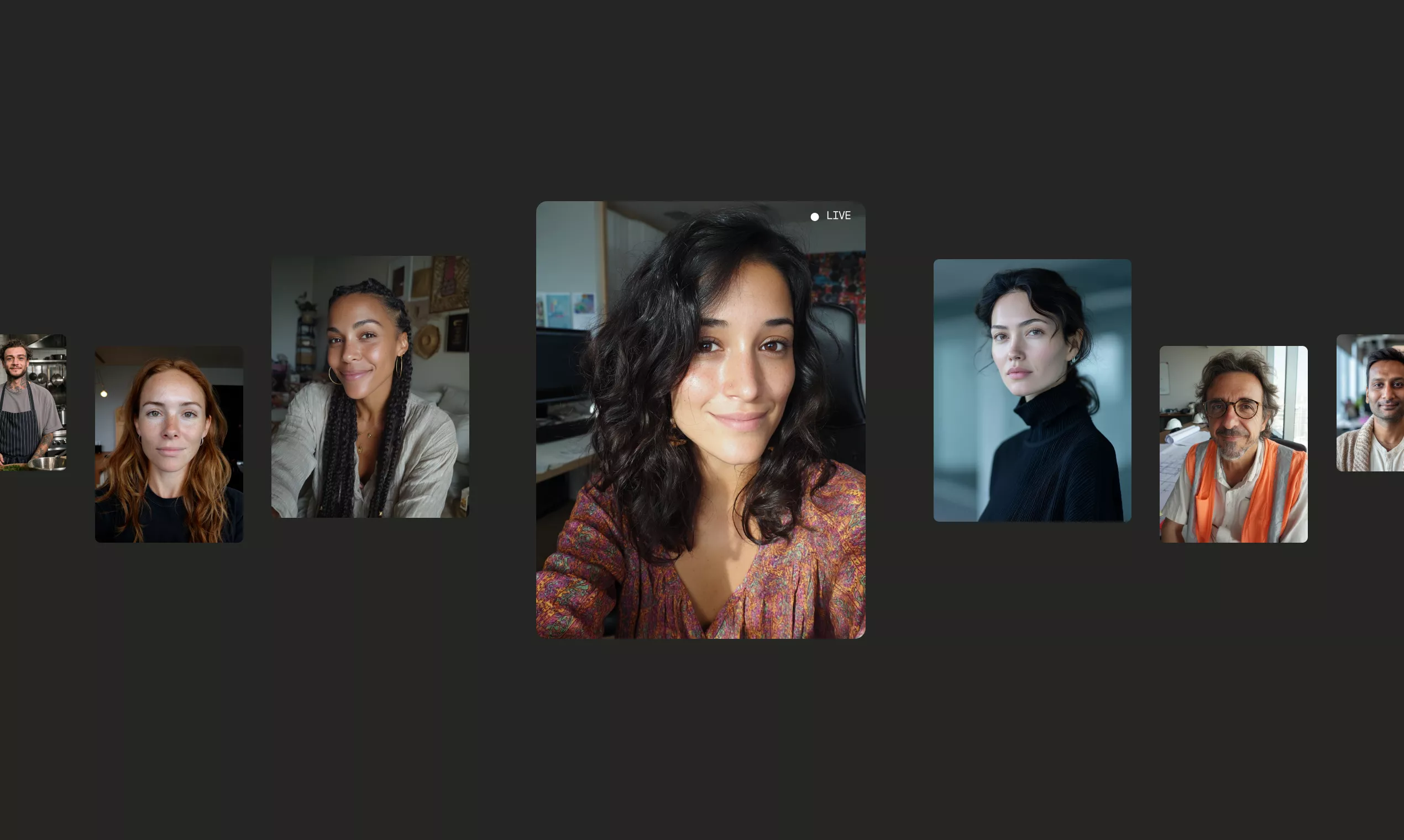
With Human Agents, a customer opens your support page in the browser and starts talking. A lifelike face with a real voice listens, answers out loud and keeps the conversation going in real time. There's no app to install and no form to fill in first.
It's available 24/7, so the midnight problem gets the same conversation as the one at ten in the morning. Nobody rewrites the rota to make that happen. Your out-of-hours page stops being a contact form and a promise to reply.

Support in the customer's own language
The same agent speaks 70+ languages. A customer in a market where you have no local team explains the problem in the language they think in and hears the answer in it too.
This changes more than translation ever did. Describing a fault, a billing mistake or a missed delivery is hard enough in your first language. Customers who do it in their second leave out details, and the missing details are often the ones that would have solved the case. When the conversation happens in their own language, you get the full account the first time.
It also changes how you enter a market. Spoken support used to follow hiring, so a new country waited until you had enough customers there to justify a team. Now the support is there on the day you open.
Many conversations at the same time
A human agent handles many conversations at once, and each customer gets its full attention. The person who arrives in the middle of your busiest hour is answered the way they'd be answered on a slow afternoon.
For you, that changes what a peak is. A product launch or a service problem still brings a wave of customers, and each of them starts talking straight away. You stop planning for the worst hour of the year.
Why we gave it a face
We could have covered the clock, the languages and the volume with text. We chose a face and a voice because talking is how people explain a problem to each other. They say it out loud, watch for a sign that it landed and add the detail they forgot. A customer does that naturally with a face in front of them. They don't do it in a chat window.
A face also tells the customer what kind of company they're dealing with. A form says their problem has been filed. A face that looks at them and answers says the company is talking with them, at that moment, about their problem.
That's the change we care about most. Until now, a real spoken conversation was something a company could give only to some of its customers. It went to the ones who called during office hours, spoke the right language and got through before the queue filled up. The rest got a slower, thinner version of support and were expected to accept it.
We build human agents because that split has no reason to exist anymore. Every customer who has a problem should be able to say it out loud to a face that answers, whatever the hour and whatever language they say it in.