"Talk to a historical figure" now means four different things. It can be a text chat with an AI playing the figure, a voice you hear, a recorded real person who answers from an archive of filmed interviews, or a face that answers live. They share a headline and little else. Which one is right for you depends on where the conversation happens: a classroom, a museum floor, or at home.
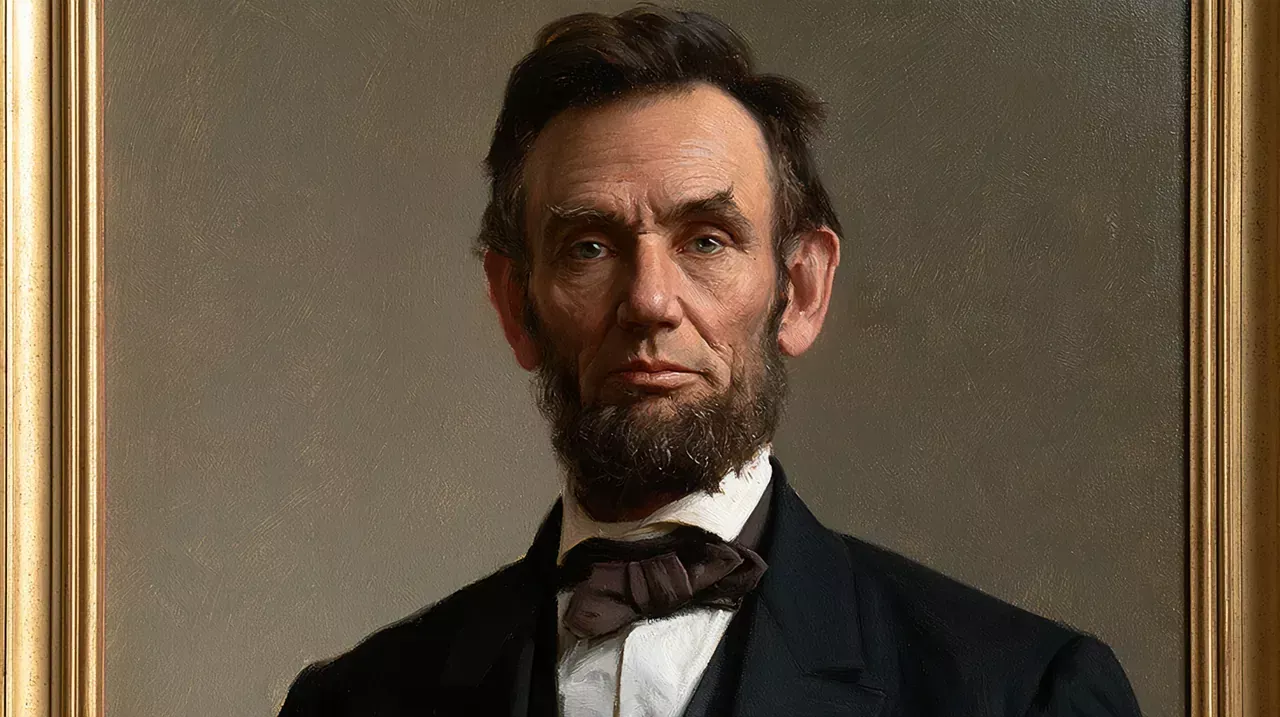
The place sets the requirements. A teacher needs to see what each student is asking and what comes back. A museum team needs something a stranger can walk up to and use, and it has to sit comfortably beside the real collection. At home, curiosity leads, and the price and the device decide the rest.
The facts about other projects in this post come from each company's own website or store listing, checked on 17 November 2026. Confirm them there before you plan around them, because features and prices change.
Text chats with an AI playing the figure
You type a question and the figure types back. This is the most common form, and most classroom tools use it.
- Character.AI. A general character chat app with millions of user-made characters, framed as interactive entertainment. The historical personas you find there are characters created by users.
Fits when you're at home and want an open, playful conversation.
- Hello History. A mobile app for one-on-one text conversations with historical figures, built by the Humy.ai team, with an education programme for schools. It's free to download with a set of free messages, then paid.
Fits when you want history conversations on a phone, on your own or through the schools programme.
- Khanmigo. Khan Academy's AI tutor and teaching assistant. Khan Academy has described a text chat that can simulate the persona of a historical figure and answer as if chatting in person. It's free for teachers and costs $4 a month for learners and parents.
Fits when the figure chat should sit inside a wider tutoring tool.
- MagicSchool. An AI platform for teachers and students that includes a tool called Character Chatbot. Student tools are part of its paid Plus plan.
Fits when you want a character chat as part of a broader set of AI tools for teachers and students.
- SchoolAI. A classroom AI platform. In its Historical Figure Spaces, students interview a figure by text chat, and teachers oversee every Space with a live dashboard. Free accounts have limited access, and school pricing is on request.
Fits when a teacher wants to follow every student's interview while the lesson runs.
A voice you hear
A voice changes the experience. You ask aloud and you listen, which suits a gallery where nobody wants to type.
- Ask Dalí. At The Dalí Museum in St. Petersburg, Florida, visitors pick up a telephone inspired by Dalí's Lobster Phone, ask a question aloud, and hear an answer in a voice that sounds like Dalí's. It's voice only, with no face. It opened in April 2024, is only available at the museum, and is listed as on view.
Fits when you can visit in person, or when you're planning an installation and want to see how a voice can be built into an object from the artist's own world.
Recorded real people who answer from an archive
This form works differently from the others. A real person is filmed answering questions, and the technology picks which recorded answer to play when someone asks.
- Dimensions in Testimony. A USC Shoah Foundation project. People ask questions aloud and get responses from pre-recorded video interviews with Holocaust survivors and other witnesses to genocide. It runs in museums such as the Illinois Holocaust Museum and online for students and educators.
Fits when the subject is testimony and the audience should hear the witness in their own words.
- StoryFile. A video platform where a real person is filmed in advance answering hundreds of questions. Later, people ask a question and receive a recorded video answer from that person. It's for museums, institutions and families.
Fits when the person can still be filmed and you want their own answers kept for later audiences.
A face that answers live
This is where our own work belongs, so here it is, described the same way as the rest.
- Ojin. We make live AI characters you can talk to face to face. You speak, and the character answers with a moving face and a voice. Nothing is recorded in advance, because the face is generated while the conversation runs.
Fits when you want people to meet a figure face to face on a website or a screen in an exhibition, and you hold a portrait you have the right to use.
A character starts from one image: a photo, a drawing, a painting or a 3D render. There's no training and nothing to rig. The face keeps the style of the image, so a painted portrait stays a painting when it speaks.
A character card decides who the character is and how they talk. You pick a voice from the library or bring your own, and the finished character goes on any website with one line of code. Our characters speak 20 languages and reply in the language they're asked in.
On ojin.ai/celebrities there are historical figures you can call in the browser. They're made from public-domain portraits, meaning paintings and photographs that are free to use. Pricing is usage-based, from $0.05 a minute, with no seats and no minimums, and plans start at $8 a month on the Creator plan, billed annually.
Where the answers come from, and why that matters
The recorded projects have the simplest answer. In Dimensions in Testimony, every response is the person's own recorded words, and nothing is generated. StoryFile draws each answer from the real interviews it filmed.
Everything else in this post is generated, and the projects say so in different ways. Khan Academy states that Khanmigo uses GPT-4, and Hello History says it runs on GPT-4 too. The Dalí Museum says Ask Dalí runs on machine learning models including GPT-4 and ElevenLabs, trained on the artist's writings and archival audio. Character.AI frames its characters as interactive entertainment, and its historical personas are written by users.
Several projects build a reminder into the product. Hello History's App Store listing tells users not to trust everything the AI generates and that facts should be validated. In SchoolAI's Historical Figure Spaces, the figure answers in the first person while bracketed notes in the third person add historical context, so a student can tell the persona's voice from the background. On our side, every face carries an "AI-generated" label, and the character says it's an AI when asked.
This matters because of what people do with the answers. A generated answer is an interpretation of the figure, written by a model during the conversation, and it shouldn't be copied into an essay or onto a wall label as a quotation. A student who knows that will check the answer against a source. A visitor who knows that can enjoy the conversation for what it is. For a teacher or a curator, the labels and notes above do part of that work for you, and the rest is a sentence you say out loud before the conversation starts.
Our view: the place picks the form
We make the live face, and we don't see it as the answer to every brief. A lesson where students need to slow down and think about their questions is well served by text, with the teacher watching. Testimony belongs to the witness, in their recorded words. A voice in a telephone suits a museum that wants the object to carry the experience. A live face earns its place where meeting the figure is the point, where a portrait people already know from the wall or a textbook looks back and answers.
Whatever form you choose, tell your audience what's generated. Say it before the conversation and keep it visible while it runs. People enjoy these conversations more when they know what they're talking to, and they trust the institution that told them.
Hold the same line on faces. Our historical figures come from public-domain portraits, and for living people and estates we work only with a likeness the person has agreed to or that has been licensed. A portrait is somebody's face, and that stays true however long ago they lived. Use only the ones you have the right to use.